FROM A NATION OF PROMISE TO NARCO STATE: THE CRISIS WE MUST STOP
By: Ady Macauley
On April 27, 1961, Sierra Leone stepped proudly into independence, rich in minerals, fertile lands, and boundless human promise, her people dreaming of a nation built into a true paradise. Sixty-five years later, those glorious hopes and vast potentials died before they could ever live: a stillbirth caused by deep-seated corruption, devastating civil war, and decades of reckless political mismanagement.
Today, our country stands at a dangerous crossroads. Our people endure crushing hardship: food, fuel, and essentials cost fortunes, wages are worthless, and families fight daily just to put one meal on the table. Beyond economic distress, a more lethal crisis threatens our sovereignty, our safety, and national survival. What once were faint rumors of narcotics passing through our ports and borders have evolved into a shocking global concern.Sierra Leone is now increasingly identified as a transit corridor for narcotics and a space exploited by transnational organised criminal network, serving as a safe haven for international fugitives and drug kingpins. Since 2020, multiple enforcement actions and seizures have linked Sierra Leone to international narcotics trafficking routes spanning South America, West Africa, and Europe. In 2022, French naval forces intercepted a vessel carrying 4.6 tons of cocaine linked to routes running through our waters; that same year, 115 kg of cocaine originating from Sierra Leone was seized in Burkina Faso, while Guinean authorities seized 1.5 tons of cocaine from a Sierra Leone-flagged ship bound for Europe. In 2023, the UK National Crime Agency seized 1.3 tons of cocaine worth £140 million, hidden in garri exported from Freetown, confirming the exploitation of legitimate trade channels for illicit purposes.
The scale grew even larger in 2024. In April, Belgian authorities seized 6 tons of cocaine at its Antwerp ports linked to shipments from Sierra Leone; by October, another 10 tons were found hidden in soybean flour in a container from our country, marking a significant escalation in interdictions linked to Sierra Leone export chain. In December that year, Pakistan intercepted thousands of tramadol tablets, precursors for the synthetic drug Kush, misdialed declared as towels and destined for Freetown. Across our mano river borders, in July 2024, a Sierra Leonean national was arrested in Liberia trying to import 10kg of methamphetamine worth $200,000, while some our nationals were also apprehended in Guinea on cocaine related activities.
The period 2025 to 2026 further revealed the deepening transnational dimension of the crisis. In January 2025, a vehicle registered to the Sierra Leone Embassy in Conakry was intercepted in Guinea carrying 7 suitcases of suspected cocaine, alongside cash and communication devices, in apparent misuse of diplomatic privileges. In the same month, five Sierra Leoneans were arrested in Senegal on drug trafficking charges, and 234 kg of cocaine was seized at the Liberia border. By October 2025, a foreign trafficker was arrested in Turkey holding a valid Sierra Leonean diplomatic passport. Most recently, in May 2026, the Spanish Navy intercepted a vessel carrying 40 tons of high-grade cocaine traced to a port of origin in Sierra Leone.
Worse than the seizures is the culture of impunity that now defines our nation. Jos Leijdekkers, known also as Bolle Jos or Umarr Sheriff, a Dutch national who stands convicted and wanted for drug trafficking by both the Netherlands and Belgium, is allegedly present in Sierra Leone. Despite formal extradition requests, he lives freely here, in proximity to the highest levels of political leadership and is widely reported in social circles that he is romantically linked to an individual highly placed in society. Our domestic laws, specifically the Extradition Act of 1974, the Netherlands is listed as a state with which we must cooperate, and drug trafficking is explicitly defined as an extraditable offence. Furthermore, Sierra Leone is a signatory to the 1988 United Nations Convention Against Illicit Traffic in Narcotic Drugs and Psychotropic Substances. Under Article 6 of this Convention, we bear a binding international obligation to treat such serious crimes as extraditable and to facilitate this process even in the absence of a specific bilateral treaty. The apparent lack of urgency demonstrated by the current Government of President Bio in advancing this request is unacceptable and legally untenable. When a fugitive sought by foreign governments is treated like royalty, walks among us with protection, our laws are mocked,rule of law is dead, and our sovereignty is sold out.
Equally shocking is the Kush epidemic destroying our nation, an addictive synthetic drug that has devastated thousands of young people and increasingly affects professionals including lawyers, doctors, civil servants. Public evidence and widespread reports connect the trade to individuals with known political links and who continue their activities unhindered. This is not just law enforcement failure, it is complicity.
When drugs and cartels take root, violence and organised crimes inevitably follows. The alleged kidnapping and killing of Alan Jalloh is widely linked to prominent international cartel networks. This reflects a broader regional pattern seen in Guinea, Guinea-Bissau, and parts of Latin America, where drug cartels have infiltrated customs, ports, military, and immigration and other agencies in the state security architecture. In Guinea-Bissau, state capture by narcotics networks transformed governance into a system serving traffickers rather than citizens. Similar vulnerabilities are now being observed through compromised border systems, weakened enforcement structures, and the abuse of diplomatic privileges.
Ironically, the seriousness of the crisis is further underscored by the Government’s own admissions. In its 2023 manifesto, the SLPP Government stated that it had been “provided credible intelligence, identifying suspicious patterns and activities leading to the seizures of narcotics and apprehension of drug traffickers.” This acknowledgment is important because it confirms that the Government itself recognises the scale and sophistication of narcotics operations affecting Sierra Leone.
However, this raises deeply troubling questions. If credible intelligence already existed within state institutions, why have major international seizures linked to Sierra Leone continued to escalate across multiple jurisdictions unchecked? Why do repeated incidents involving cocaine shipments, diplomatic channels, and international trafficking networks continue to emerge despite these claimed intelligence capabilities? The issue therefore is no longer whether authorities are aware of the problem. The real concern is whether sufficient political will, institutional independence, and enforcement action exist to confront criminal networks at the highest levels without fear or favour.
The consequences are catastrophic for our country and citizens are dire:
Our reputation is destroyed: Sierra Leone is now being classified internationally as a “Narco-State” and we risk being placed on international watchlists including FATF grey/blacklistframeworks and enhanced AML/CFT monitoring regimes, which will severely limit the ability of those holding Sierra Leonean passport to travel, trade, and engage globally. Those travelling on Sierra Leonean passports are being subjected to embarrassing and invasive special security protocols. Investors will stay away, donors reconsider partnerships, and we risk being blacklisted globally consistent with World Bank and IMF risk assessments on governance-related investment premiums in high-risk jurisdictions.
Erosion of Trust: Citizens no longer believe in the rule of law as should be reflected in the governance perception indicators such as Afrobarometer surveys and World Justice Project Rule of Law Index trends in fragile states. When wanted criminals are protected and drug lords walk free, democracy becomes a mockery.
Collapse of Human Capital: Our human capital is being wasted; a generation is lost to addiction consistent with UNODC World Drug Report findings on rising synthetic drug use in West Africa, including “kush”-type substances. If our youth and professionals are addicted, who will build our economy? The brain drain is not just about migration; it is about mental destruction. The WHO substance use disorder framework recognizes addiction as a structural public health burden affecting productivity and workforce capacity.
Economic consequences: Our economy cannot grow when crime rules, and our democracy dies when laws apply only to the poor and powerless. No serious investor will put money into a country known for drugs and violence consistent with World Bank governance-risk premium models and FATF AML/CFT compliance costs affecting correspondent banking relationships. Our tourism industry is dying, and legitimate businesses are suffering.
Healthcare Burden: The cost of treating addiction and drug-related health issues is overwhelming our already weak health system, draining resources that should be used for development as stated by the WHO public health burden framework on substance abuse, including mental health, infectious disease risks, and emergency care pressure in low-resource systems.
Effect on Families: Families are being torn apart. Parents watch helplessly as their children become addicts or victims of crime. The fear of kidnapping and violence has destroyed the peace of mind that every family deserves. We are raising children in an environment of fear and lawlessness. The UNICEF child protection frameworks recognize substance abuse environments as drivers of child vulnerability and household instability in fragile states like Sierra Leone.
National Security Risk: Drug trafficking is directly linked to terrorism and organized crime as stated in the UN Security Council Resolution 2195 (2014), which establishes the nexus between transnational organized crime, state fragility, and terrorist financing. Allowing our territory to be used as a transit hub makes Sierra Leone a soft target for global criminal networks for INTERPOL assessments of West African trafficking corridors highlight similar vulnerabilities in weak-border governance systems. When police are compromised and criminals are protected, the security architecture of the state fails. We are sitting on a time bomb of violence and social unrest when looking at comparative precedent: Guinea-Bissau state capture literature in UNODC regional security analyses.
THIS IS EXACTLY WHAT AN ADY MACAULEY APC-LED GOVERNMENT WILL DO TO RESCUE OUR COUNTRY AND SECURE OUR FUTURE.
Our first and most urgent task is to restore the rule of law. Under an APC government, justice will no longer be for the poor and powerless alone. We will completely reform our justice system to ensure equality for every citizen and every person living within our borders. We will send a clear, unmistakeable message: In Sierra Leone, criminals are not heroes, and public office is never a shield for crime. We will fully honour all legitimate international extradition requests, complying strictly with our own laws and our binding obligations under international treaties, including the Extradition Act 1974 and the 1988 UN Convention Against Illicit Traffic in Narcotic Drugs and Psychotropic Substances. We will review and strengthen our legal framework to close loopholes exploited by organised criminal networks, including beneficial ownership concealment, weak asset declaration regimes, and procedural delays in prosecution.
Punishments for drug trafficking will be strengthened in line with international best practice under UNODC model legislation on serious narcotics offences to ensure real deterrence. Crucially, we will expand the scope of liability to include aiding, abetting, facilitation, and wilful blindness where persons knowingly associate with or materially support organised criminal activity.To make this effective, we will establish a Special Independent Task Force on Transnational Organised Crime. This body will be operationally independent, with statutory protections from political interference, and will have powers to investigate, prosecute in coordination with the Attorney-General, and execute asset tracing and confiscation under a strengthened Proceeds of Crime regime. There will be no sacred cows.
Drug cartels cannot operate alone; they rely heavily on professional enablers within financial, legal, and commercial systems. An APC government led by me will engage all professional regulatory bodies including the Chamber of Commerce, the Chartered Institute of Accountants, the Institution of Civil Engineers, the Bar Association, and the banking sector. We will strengthen enforcement of Know Your Customer (KYC), Suspicious Transaction Reporting (STR), and Anti-Money Laundering (AML) obligations in line with FATF standards.
We will ensure mandatory compliance training and enforce sanctions for non-reporting institutions. Professionals will be legally required to report suspicious transactions involving large cash flows, offshore structuring, or unexplained wealth indicators. We will close regulatory gaps that allow trade-based money laundering through construction contracts, import-export schemes, and shell companies. We will also strengthen the Financial Intelligence Unit (FIU) with real-time access to customs, immigration, and banking data to detect illicit financial flows before they are integrated into the formal economy.
3. Secure Our Borders and Strengthen Our Institutions
We will turn Sierra Leone’s borders and entry points from gateways for contraband into fortresses of national security. We will completely overhaul our Customs, Ports Authority, Immigration Department, and all security agencies. These institutions will be rebuilt on the foundation of integrity and professionalism.
We will introduce rigorous background checks for all staff, set up dedicated anti-corruption units within each agency, and install modern scanning and surveillance technology at every port, airport, and border crossing. Furthermore, we will strictly regulate and audit the use of diplomatic passports and official privileges. Under our watch, diplomatic status will never again be abused to shield criminals, transport illegal goods, or bypass the law. We will secure the systems meant to protect us, so they serve their true purpose.
The rise of Kush and other dangerous substances has become a public health and national security emergency. We will implement a dual-track response combining enforcement and public health intervention. We will dismantle supply chains through targeted operations against traffickers and financial networks under a strengthened narcotics enforcement framework supported by regional intelligence sharing.At the same time, addiction will be formally treated as a public health condition under a national Drug Treatment and Rehabilitation Strategy aligned with WHO standards. We will establish rehabilitation centres in all regions, integrate addiction treatment into primary healthcare, and train specialised mental health and addiction professionals.We will also introduce school-based prevention programmes, community outreach, and early intervention systems to reduce youth vulnerability and prevent recruitment into drug use networks.
We will rebuild Sierra Leone’s credibility as a compliant and responsible member of the international system. We will strengthen cooperation with Interpol, the United Nations Office on Drugs and Crime (UNODC), ECOWAS security frameworks, and bilateral law enforcement partners. We will institutionalise mutual legal assistance mechanisms and ensure timely response to extradition and asset recovery requests. We will also strengthen compliance with FATF recommendations to improve financial transparency, reduce correspondent banking risk exposure, and restore investor confidence. Our foreign policy will prioritise rule-of-law diplomacy, ensuring Sierra Leone is recognised as a jurisdiction committed to fighting transnational organised crime.
Government cannot do this work alone. To win this fight, we will institutionalise community security partnerships.We will establish community policing structures, whistleblower protection frameworks, and secure reporting mechanisms for citizens. We will formally integrate youth groups, religious institutions, and traditional authorities into local security coordination frameworks. We will also introduce a National Integrity and Civic Responsibility Campaign to promote anti-drug awareness, reporting culture, and community vigilance.
Fellow Sierra Leoneans, Sierra Leone is dying, not from poverty alone, but because criminals have been allowed to take control of our country and those chosen to lead us seem to be protect them instead of protecting you. They have traded our dignity, our safety, and our future for criminal wealth and power. Enough is enough. Under my leadership, the APC will stand firm. We will clean up our state institutions, chase out the traffickers, heal our youth, and restore Sierra Leone as a proud, safe, and respected nation. The choice is clear: Sierra Leone must be ours again — for us, for our children, and for generations to come.Let us reclaim our name, rebuild our reputation, and show the world that we are a nation of law, of dignity, and of hope.
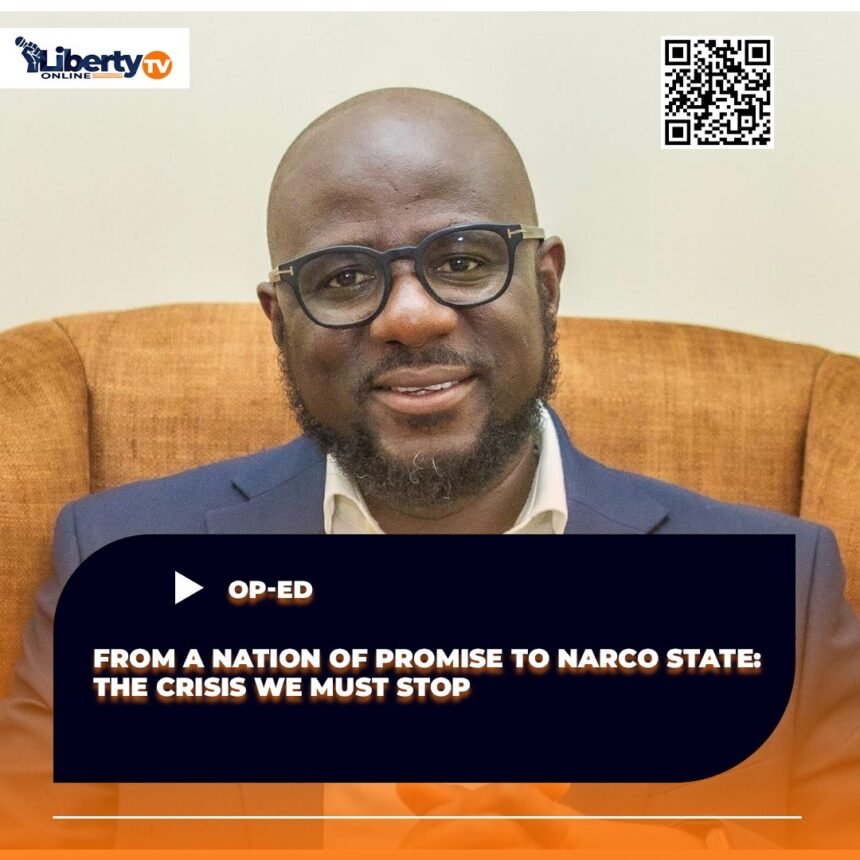
The author is a Flag Bearer aspirant for APC, a lawyer and Anti-corruption expert, former prosecutor and Commissioner of the Anti-Corruption Commission, and an alumni of the International Law Enforcement Academy at its Accra, Gaborone and Rosewall Campuses.