BY ALISIOUS KONGO
𝐒𝐮𝐬𝐩𝐞𝐧𝐝𝐞𝐝 𝐉𝐮𝐝𝐠𝐞 𝐂𝐨𝐧𝐝𝐞𝐦𝐧𝐬 𝐒𝐚𝐥𝐚𝐫𝐲 𝐅𝐫𝐞𝐞𝐳𝐞 𝐚𝐬 𝐓𝐡𝐫𝐞𝐚𝐭 𝐭𝐨 𝐉𝐮𝐝𝐢𝐜𝐢𝐚𝐥 𝐈𝐧𝐝𝐞𝐩𝐞𝐧𝐝𝐞𝐧𝐜𝐞
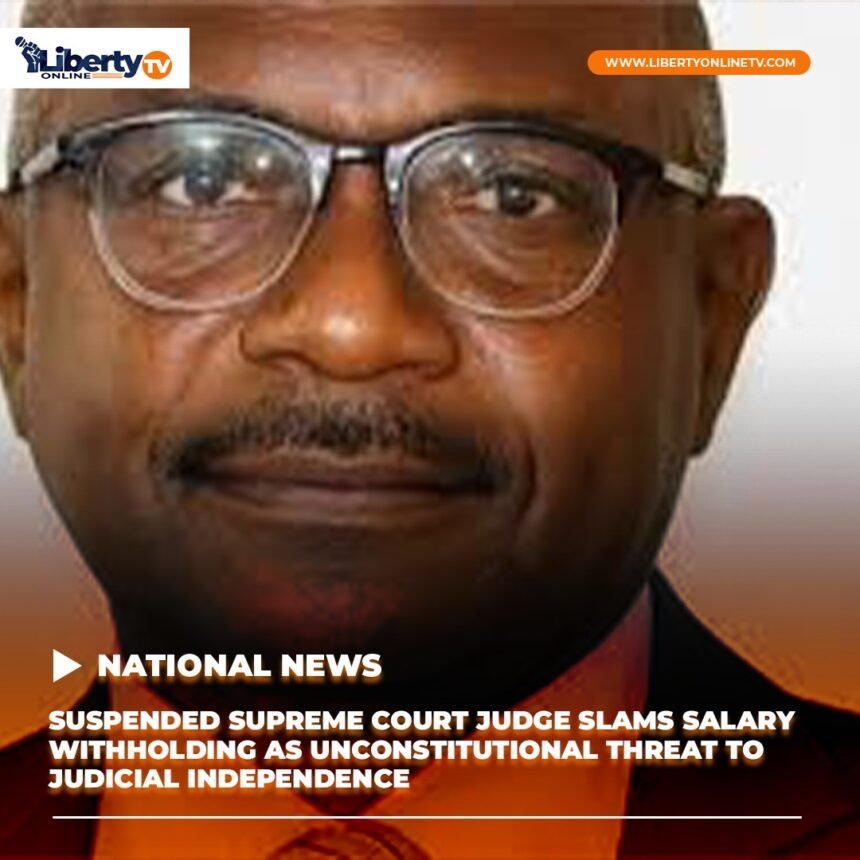
Justice Allan B. Halloway has formally rejected what he terms the unconstitutional and unlawful suspension and withholding of his salary, grounding his protest firmly in the 1991 Constitution of Sierra Leone.
In a referenced letter dated 19th September 2024, issued to the Director General of the Human Resource Management Office (HRMO), Justice Halloway stressed that the decision amounts to a direct violation of his constitutional entitlements as a judge of the superior court of Judicature.
He recalled that he had already lodged a complaint against the Chief Justice for unlawfully terminating his salary, warning that such actions constitute a dangerous assault on judicial independence.
Justice Halloway emphasized that the application of the Civil Service Code to his case is a categorical error of law, since Chapter VII of the Constitution clearly separates judges from civil servants.
He argued that his status as a Supreme Court judge places him under constitutional, not civil service, regulation, and he underscored the fact that he is not facing any criminal investigation nor has he been charged with an offence. For this reason, he dismissed the Director General’s reliance on the Civil Service Code as unlawful and unconstitutional, and further challenged the competence of both the Judicial and Legal Service Commission (JLSC) and the Chief Justice to issue the order on which the Director General relied.
On the question of his suspension, Justice Halloway invoked Sections 137(5) and 137(6) of the Constitution, which stipulate that only a tribunal appointed by the President, upon proper recommendation, can investigate and determine whether a judge should be suspended. He questioned whether the JLSC had, in fact, made such a formal request to the President, casting doubt on the legitimacy of the entire process. In his view, the suspension order is invalid and of no legal effect, since the constitutionally mandated procedure remains unfulfilled.
At the heart of his argument is Section 138(3) of the Constitution, which guarantees that the salary, allowances, and other conditions of service of a judge “shall not be varied to his disadvantage.” Halloway insisted that the withholding of his salary constitutes a direct breach of this non-derogable provision — one designed to preserve the financial security and independence of the judiciary from executive or administrative interference.
He warned that allowing such a violation to stand would set a dangerous precedent, eroding judicial independence and exposing the judiciary to political manipulation.
In conclusion, Justice Halloway demanded that the Director General immediately rescind and retract the HRMO letter, restore his salary, and respect his constitutional entitlements. He described the decision as not only a personal injustice but a constitutional crisis, one that undermines the rule of law and the separation of powers. He vowed to pursue all available legal remedies, including prerogative writs from the Superior Courts of Judicature, if his entitlements are not reinstated. By framing the matter in constitutional rather than personal terms, Halloway warned that the authorities risk betraying the very Constitution they are sworn to uphold.