HOW CLIMATE CHANGE IS RESHAPING ORDINARY LIFE
_By Mabel Kabba_
The rainy season used to follow a rhythm that farmers in Sierra Leone could set their watches by. Plant in May. Harvest in October. But that rhythm has broken and for millions of ordinary Sierra Leoneans, the consequences are no longer abstract.
From the flooded hillside communities of Freetown to the submerged rice fields of Tonkolili, climate change is not a distant threat debated in conference rooms. It is the water rising through someone’s doorway at 2 a.m. It is a season’s crops gone in a single night.
Sierra Leone contributes almost nothing to global carbon emissions. Yet it is paying a devastating price for the choices of industrialised nations. The World Bank now ranks Sierra Leone among the fifteen worst climate-affected economies in the world, with projected GDP losses of 9 to 10 percent by 2050 if adaptation measures are not urgently scaled up.
Those are numbers on a page. On the ground, they translate into lives upended.
Rising temperatures, more frequent extreme heat days, and increasingly erratic rainfall, including sudden, intense downpours, are battering a country that depends heavily on agriculture and hydropower to survive. When the rains fail, the lights go out and the harvests disappear. When they come too hard, they destroy everything in their path.
Last September brought a devastating reminder of how exposed Sierra Leone really is. The National Disaster Management Agency recorded 27 separate flood events across multiple districts in the space of weeks. More than 23,500 people were affected. Entire communities were displaced. Buildings collapsed. Over 7,300 hectares of farmland went under water.
In Tonkolili district, in 2024 the Bumbuna Dam overflowed its capacity after persistent heavy rains, sending floodwaters tearing through communities downstream. Families lost household goods, food supplies, and livestock in a single day. Stagnant floodwaters then threatened outbreaks of cholera, typhoid, and malaria.
Over 1,500 farmers watched their farmlands submerge across more than fifty communities, with crops destroyed and livelihoods wiped out, threatening not just this year’s harvest, but long-term recovery.
The following month, Freetown itself was not spared. On the night of 24 October, intense rainfall flooded communities across the capital. At Texaco Old Road, floodwaters breached a perimeter fence that had held for fifteen years, sweeping into classrooms and a church auditorium and forcing schools to close until the damage dried out.
The damage goes further than the floods themselves. Communities across Sierra Leone report that increasingly intense weather events, heavy rainfall, rising temperatures, windstorms, and droughts, are degrading the unpaved roads that connect villages to markets, schools, and health centres. When those roads wash away, a sick child cannot reach a clinic. A farmer cannot sell her produce. A student cannot get to school.
These are the mundane, grinding costs of climate change that rarely make international headlines.
There is a cruel logic to who suffers most. The poorest households bear the greatest burden of climate disasters, because many informal settlements are concentrated in flood-prone coastal zones and degrading hillsides and because those same communities have the least access to clean water, sanitation, transport, electricity, and healthcare when disaster strikes.
In Freetown, that pattern is carved into the city’s topography. The wealthy live on flat, well-drained land. The poor live on hillsides and in valleys that become rivers when the rains arrive.
Climate change is not the only villain in this story. Experts say that deforestation and unplanned urban expansion are compounding the damage from heavy rainfall with some analysts estimating that up to 90% of the worst disaster impacts are man-made. Trees that once held hillsides in place have been felled. Drainage channels are blocked with waste. Buildings have crept into floodplains with no enforcement to stop them.
The 2017 Regent mudslide, which killed over 1,100 people, was a brutal preview of what happens when these pressures combine. The country has not fully heeded that warning.
Adaptation cannot wait for the world to cut its emissions. The World Bank’s 2025 Country Climate and Development Report argues that climate action is not merely an environmental obligation for Sierra Leone, but a precondition for sustainable economic growth.
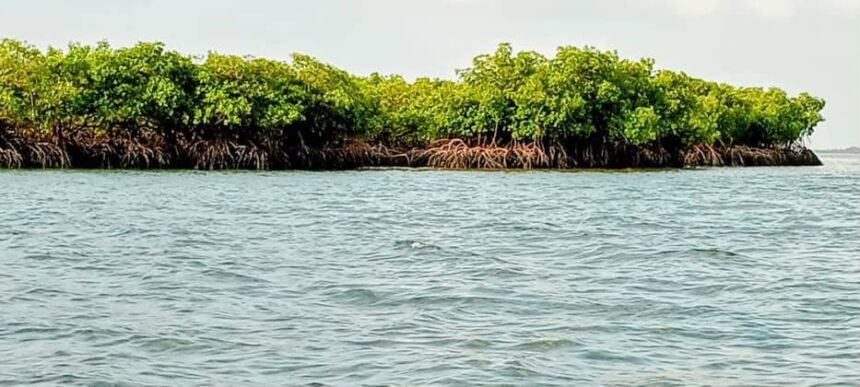
That means enforcing building regulations. Restoring mangroves and forests. Investing in drainage. Relocating communities from the most dangerous zones. And listening to the farmers, fishers, and city residents who understand the changing weather in their bones, even if they cannot name it in the language of climate science.
The rains that once brought life to this country are increasingly bringing destruction. Sierra Leone did not cause this crisis. But it is Sierra Leoneans, the market woman, the rice farmer, the child in a flooded classroom, who are living it.