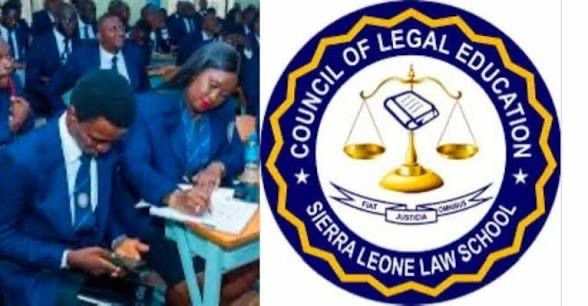
A policy brief released by the Institute for Legal Research and Advocacy for Justice (ILRAJ) has raised serious constitutional and legal concerns over President Julius Maada Bio’s decision to establish an independent investigation committee into the Sierra Leone Law School.
The President announced the committee on 7 April 2026, following a meeting with the Chief Justice and the Attorney-General. The five-member panel, chaired by former Attorney-General Dr. Priscilla Schwartz, is mandated to investigate allegations of wrongdoing and governance failures at the country’s sole professional legal training institution within eight weeks. The Anti-Corruption Commission (ACC) has suspended its own ongoing investigation pending the outcome of the committee’s work.
ILRAJ, however, argues that no constitutional or statutory authority has been cited for the President to investigate a body created by Act of Parliament and chaired by the Chief Justice. The brief states that the intervention violates the principle of separation of powers enshrined in the 1991 Constitution and that the suspension of the ACC’s probe compromises the statutory independence of an institution which, by law, is not subject to the direction or control of any person or authority.
According to the policy brief, the Council of Legal Education, chaired by the Chief Justice, had already taken decisive action against the former director, Dr. Abu Bakarr Bangura, following the discovery of extensive irregularities. The Council accepted his resignation, placed him on immediate leave, and formally referred the matter to the ACC, which launched a probe in late March 2026.
“The presidential intervention was not prompted by inaction,” the brief states. “On the contrary, the Council had already taken every appropriate step.”
ILRAJ further notes that the President did not invoke the Commissions of Inquiry Act, which provides a formal statutory mechanism for executive investigations with coercive powers. Instead, an ad hoc committee was announced by press release with no identifiable legal basis, no procedural rules, and no mechanism for enforcing compliance.
The brief also raises concerns about the chairperson’s prior involvement in Law School affairs. Dr. Schwartz, as Attorney-General in 2019, directly intervened in the institution by directing the then-Acting Director to proceed on leave pending investigation, a directive that was contested as ultra vires.
“The appointment as Chair raises reasonable apprehension of bias,” ILRAJ states.
The institute describes the suspension of the ACC’s investigation as perhaps the most alarming aspect of the press release. Section 9 of the Anti-Corruption Act provides that the Commission shall not, in the performance of its functions, be subject to the direction or control of any person or authority.
“If the ACC can suspend corruption probes whenever the President establishes a parallel committee, the statutory guarantee of independence is rendered a dead letter,” the brief warns.
ILRAJ has issued several recommendations, including that the ACC resume its investigation forthwith, that the presidential committee be dissolved or reconstituted under the Commissions of Inquiry Act, and that Parliament undertake comprehensive structural reforms to the Council of Legal Education Act. The institute also reiterated its support for the constitutional entrenchment of the ACC.
“Nobody disputes that the Sierra Leone Law School requires reform,” the brief concludes. “But the answer to institutional failure is not the substitution of one unchecked authority for another. The answer is the rule of law.”