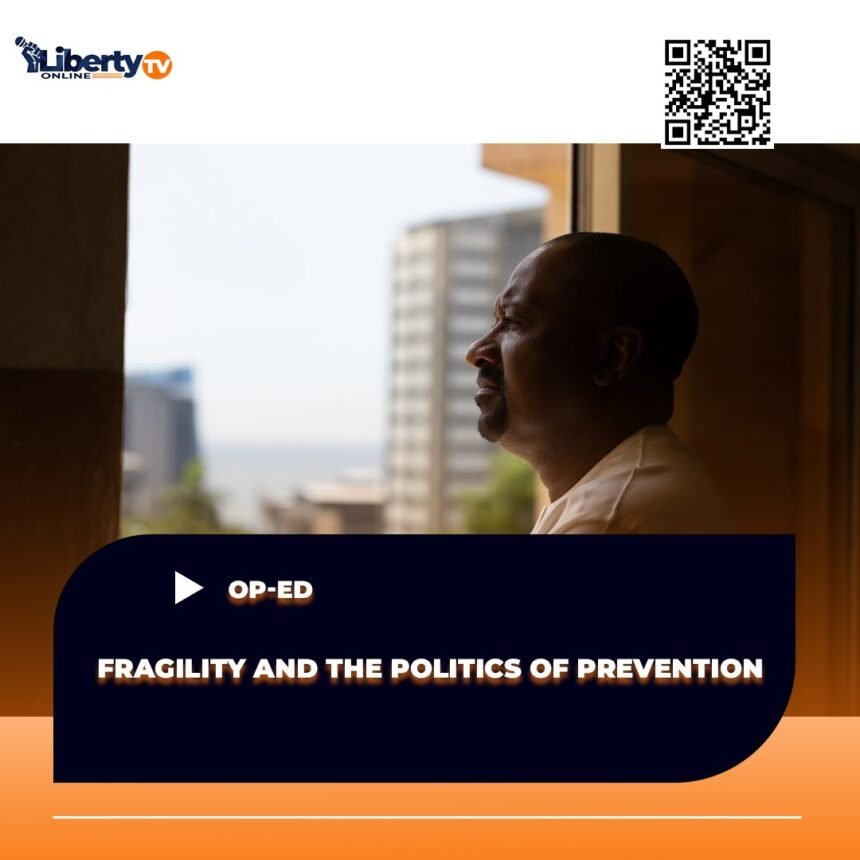
Vice President Dr. Mohamed Juldeh Jalloh has called on the international community to prioritise preventive investments over crisis response, arguing that fragile states such as Sierra Leone need more predictable financing and stronger partnerships to achieve sustainable development.
In an opinion article titled “Fragility and the Politics of Prevention,” published ahead of the Hamburg Sustainability Conference, the Vice President said developing countries are increasingly grappling with multiple challenges, including rising debt, unemployment, climate change, food insecurity and declining development assistance, forcing governments to make difficult decisions over competing national priorities.
Dr. Jalloh described the situation as the “politics of painful choices,” where governments must decide whether to invest in climate resilience, healthcare, agriculture, infrastructure or social protection despite limited fiscal resources.
He argued that rather than redistributing scarce resources among urgent priorities, governments and development partners should adopt what he termed a “politics of prevention” by investing in initiatives that reduce future crises and expand long-term economic opportunities.
According to the Vice President, fragility should no longer be viewed as a temporary phase but as a persistent condition driven by weak domestic revenue, climate vulnerability, infrastructure deficits, demographic pressures and recurring external shocks that hinder long-term development.
He noted that while the global community often spends significantly more responding to emergencies than preventing them, investments in infrastructure, climate adaptation, healthcare and youth employment strengthen the social contract, improve state legitimacy and promote sustainable economic growth.
Highlighting Sierra Leone’s development priorities, Dr. Jalloh identified child nutrition during the first 1,000 days of life as one of the country’s most important preventive investments. He said approximately 700 children are born in Sierra Leone each day, making early childhood nutrition central to the country’s future productivity and resilience.
He added that the Government is advancing this agenda through initiatives such as Feed Salone, food fortification, school feeding programmes, nutrition-responsive budgeting and the proposed Nourish Salone movement.
The Vice President also said Sierra Leone is investing in human capital development, agricultural transformation, climate resilience and reforms aimed at attracting greater private sector investment. However, he stressed that domestic efforts alone cannot bridge the country’s financing gap.
Dr. Jalloh urged the international community to provide more predictable concessional financing for fragile states, expand risk-sharing mechanisms to encourage investment and introduce greater flexibility in the design and delivery of development finance.
He concluded that the goal of development should not be to help countries manage crises more effectively but to enable them to break free from recurring cycles of instability and move towards resilience, productivity and sustainable partnerships.
Dr. Jalloh’s article was published in connection with the Forum “Sustainable Development 2030 and Beyond,” organised in cooperation with the Hamburg Sustainability Conference, where global leaders, policymakers, businesses, academics and civil society representatives are expected to discuss strategies for advancing sustainable development amid growing geopolitical and economic challenges.