
Local Fishermen Fear the Worst as Government’s Proposed “Closed Season” Closes in
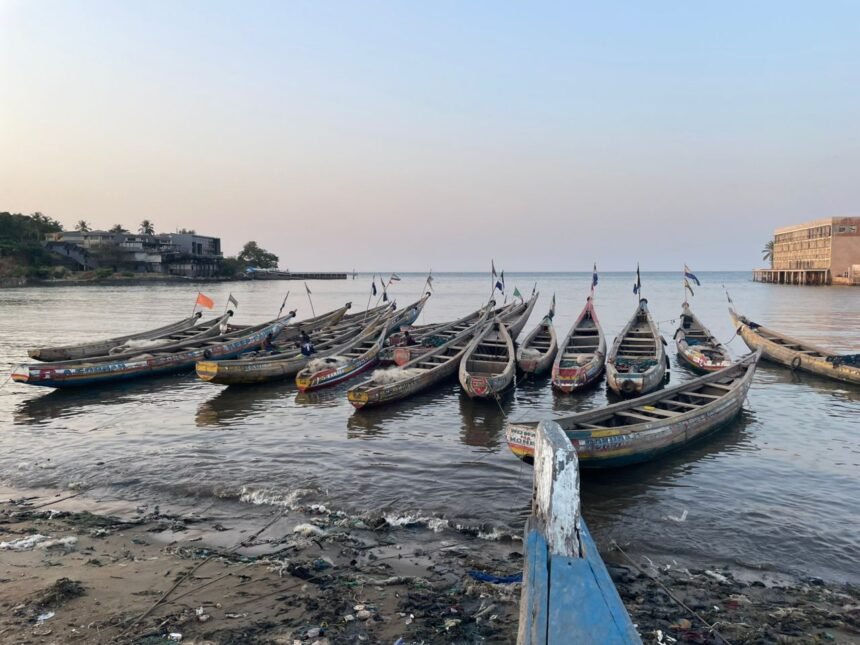
Canoes line up at Tambakula Wharf
Photo: Ibrahim Mansaray/Liberty Online TV
Fishermen at the Tambakula Wharf at Aberdeen, West of Freetown, busied themselves on a Friday evening, mending their nets and canoes. Among them, 30-year-old Yusuf Kargbo sat on one of the canoes wearing a facial appearance that revealed his worries, a look almost all the other fishermen wore. For the past five years, Kargbo has been making a living for himself and his family through daily artisanal fishing.
He and many other fishermen fear that their livelihood is at stake as the government’s “closed season” is set to take effect on February 1, just a week away. The seasonal closure would see artisanal fishermen across Sierra Leone halt all fishing activities for a month.
“I don’t feel good about this,” Kargbo told Liberty Online Tv. “I think this would be a very difficult period for me and my family.” Kargbo is unmarried but shoulders the responsibility of his widowed mother and two siblings in the north.
Making the announcement in December 2024, Minister of Fisheries and Marine Resources, Princess Dugba, said the closure aims to allow fish stock to replenish, ensuring sustainability for the fishing industry.
Tambakula is one of the biggest wharfs in the Western Urban where about a thousand fishermen, fishmongers and traders show up on a daily basis to look for a living. As the closed season draws near, fishermen are beginning to imagine life during an unprecedented one month halt in what many of them say is their only source of income.
Kargbo told Liberty Online Tv that life at sea had already been difficult because of the dwindling fortunes and the activities of industrial vessels.
“Trawlers cut our nets and sometimes collide into us,” he said, adding “sometimes the offenders indemnify us, other times they speed off, making it difficult for us to determine the ones responsible.
During an interview with Liberty Online TV, the head of the Artisanal Division at the Ministry of Fisheries and Marine Resources, Sheku Sei, said that some of these collisions have been as a result of artisanal fishermen fishing without lights beyond the five to six nautical miles Inshore Exclusion Zone (IEZ), an area reserved for artisanal and recreational fishing.
“Sometimes, the trawlers collide into them even before seeing them,” he said. Notwithstanding, Sei said that they have ensured compensation for fishermen who bring these complaints to them. The only complaints they have disregarded, he said, are the ones from unlicensed canoes.
Fishing provides employment for about 35,000 fishermen and 450,000 processors and traders, according to the Sierra Leone Investment and Export Promotion Agency. The sector also contributes about 12% to Sierra Leone’s Gross Domestic Profit.
The government also plans on exporting fish to China starting this year. In December the Fisheries Minister said the project’s paperwork is nearing its completion. She also stated that the ministry surpassed its revenue target for 2024, highlighting the fisheries sector’s immense contribution to the national economy.
The wealth in marine resources, which has attracted foreign investment and facilitated international trade, has come at the expense of coastal communities which have been badly hit by economic hardship.
And as Kargbo put it, the seasonal closure would only compound the economic hardship for fishermen.
Plastic waste and seaweed have also threatened marine livelihoods, resulting in little or no catch despite fishermen spending hours at sea.
Why Only Artisanal Fishermen?
Amara Bendu has been at Tambakula for eight years. Like Kargbo, Bendu told Liberty Online Tv that on three occasions they have suffered from the activities of industrial vessels, noting that they were only compensated twice.
Beyond these issues, Bendu said that industrial vessels also catch juvenile fishes, making them culpable of not letting the fish grow, a problem the closed season seeks to address.
Bendu questions why the closed season is only limited to artisanal fishermen. “The industrial vessels cause the noise that drives the fishes away, but why is the closed season for us only and not them,” he said.
The Fisheries Minister said despite warnings, artisanal fishermen still engage in unsustainable fishing practices, such as using under-sized mesh nets, suggesting that they are more responsible for the depleting fish stock.
A fisherman who spoke to Liberty Online Tv on the condition of anonymity said this decision to suspend artisanal fishing is to force people to buy from industrial fishers whom he said have been snubbed because of exorbitant prices. While he understands the importance of the closure, he said they would have preferred it some other time.
Being a devout muslim he used to prepare for Ramadan, a month in which muslim fast from dawn to dusk, a month before. This year, Ramadan is preceded by a month of non-fishing, affecting his preparations for muslims’ holiest month.
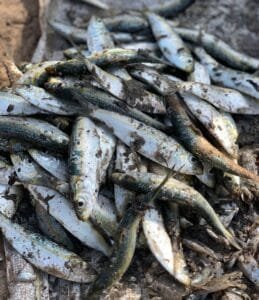
Some fish caught by artisanal fishermen
Photo: Ibrahim Mansaray/Liberty Online TV
No Prior Consultations
Baba Kamara, the master fisherman at Tambakula, has been attending some of the engagements the government has held with fishermen to discuss the new policy but he feels a foundational step was skipped.
“The government did not hold any consultations with us before announcing a closed season,” Kamara told Engage Salone. “The announcement just came to us.”
Kamara asserted that they haven’t been treated fairly especially when they were never consulted before a decision surrounding their livelihood was made.
The government promised “alternative livelihood support” to fishermen during the closure, but just like many other fishermen, Kamara feels this would not be enough for the thousands of families that live off fishing. “They will be well taken care of,” the Fisheries Minister said.
Papa Alpha Suma, former harbour master at Tambakula has been a fisherman for more than four decades. Suma has 16 fishermen working under him. He feels the government’s alternative provision may not be able to reach them
While Kargbo hopes this closed season turn out well for fishermen, he still lives with the premonition of what life would be like until he can go to sea again.