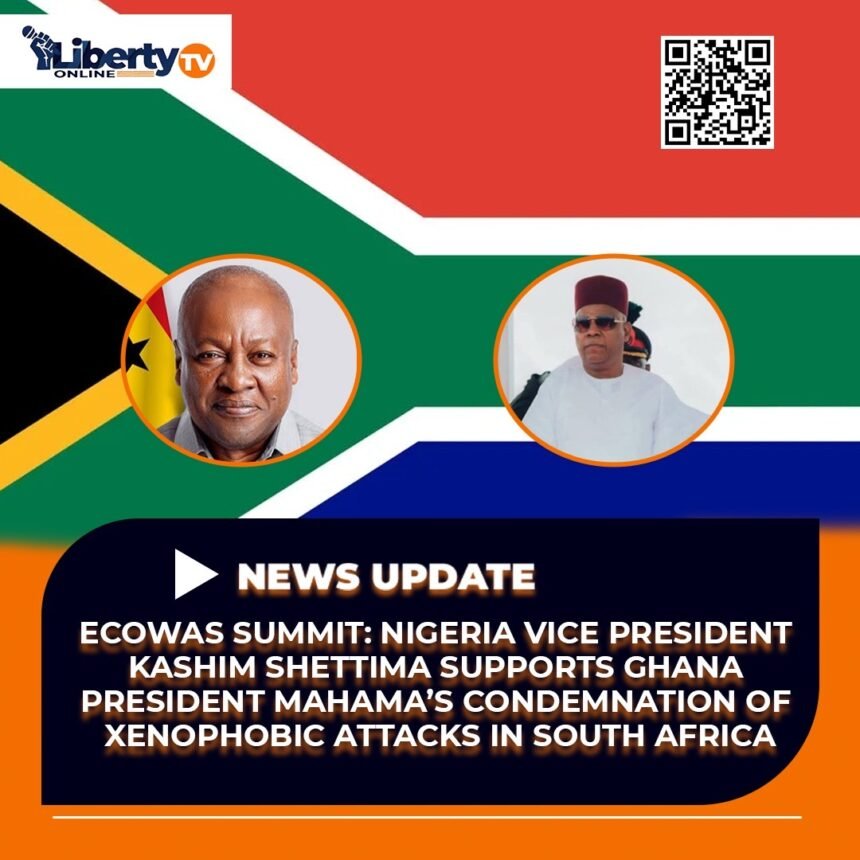
Ghana’s President John Dramani Mahama has used the 69th Ordinary Session of the ECOWAS Authority of Heads of State and Government in Sierra Leone to call for action against recent xenophobic attacks targeting Ghanaian, Nigerian, and other African nationals in South Africa, with Nigeria’s Vice President Kashim Shettima backing the condemnation.
Speaking at the summit on Sunday, July 19th 2026 in Lungi, President Mahama said Ghana was deeply concerned about the incidents, which he described as a setback to Africa’s long-standing commitment to unity and solidarity.
He welcomed ECOWAS’ decision to support Ghana’s petition for the matter to be raised at the next African Union Peace and Security Council summit.
“African liberation was achieved through solidarity across our borders. We must never permit our common legacy to be weakened by intolerance by a small group of people,” President Mahama said.
He added that African countries must continue to protect the principles that brought the continent together, saying differences should not undermine cooperation among nations.
Following Ghana’s call, Nigeria’s Vice President Kashim Shettima also condemned the attacks, saying Nigeria “strongly condemns” violence against its citizens and other Africans in South Africa.
“We strongly condemn the xenophobic attacks on the citizens of our country and other fellow Africans in the Republic of South Africa,” Vice President Shettima said.
He said Nigeria supports Ghana’s decision to present the matter before the African Union, adding that the move would send “a clear message that this type of intolerance is unacceptable.”
“South Africa needs to be reminded that the freedom the country currently enjoys is due to the liberation efforts of African countries,” Shettima said.
The Nigerian Vice President called for continued dialogue, solidarity, and constructive engagement among African nations, stressing that regional cooperation remains critical in addressing challenges affecting the continent.