
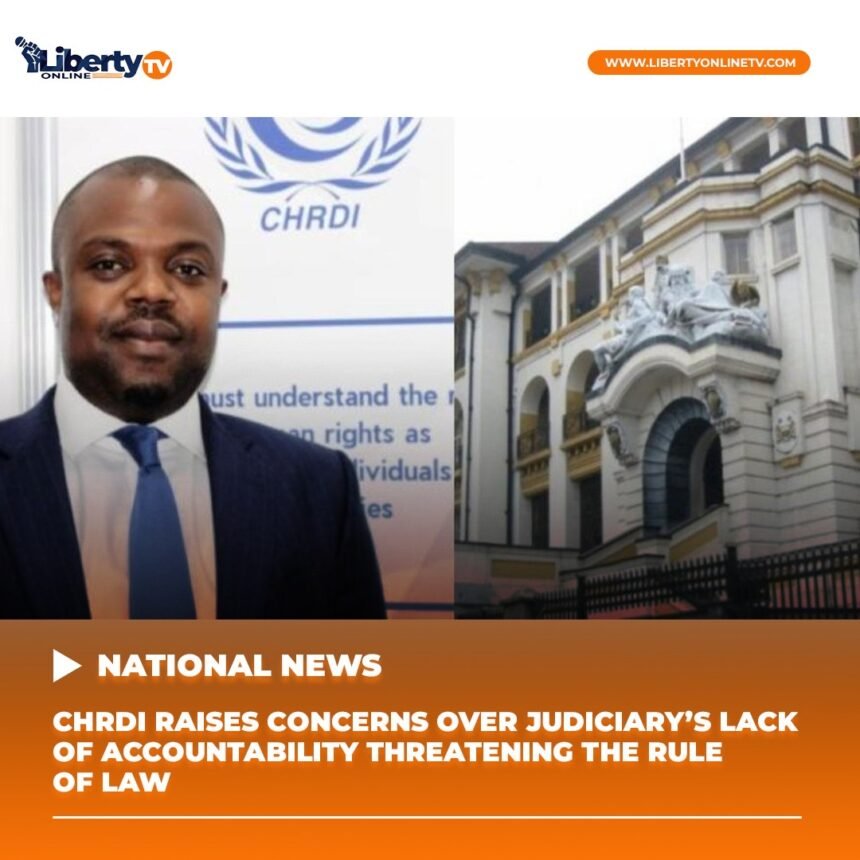
The Campaign for Human Rights and Development International (CHRDI) has accused Sierra Leone’s judiciary of showing blatant disregard for the country’s laws on transparency and accountability, raising serious concerns about the state of democracy and the rule of law.
In a recent statement, CHRDI expressed frustration after months of what it described as “silence and neglect” from the judiciary. The group said it had written to the judiciary on August 21, 2025, seeking information on the 2018 Commissions of Inquiry cases, particularly those before the Appeals Court and Supreme Court.
Under the Right to Access Information Act 2013, the judiciary is required by law to respond within 15 working days. But that deadline came and went—without even an acknowledgment.
“Instead of leading by example, the judiciary has chosen to ignore the very law that binds every public institution in Sierra Leone,” CHRDI lamented.
After waiting in vain, the rights group took the matter further. On September 23, 2025, CHRDI filed a formal complaint with the Right to Access Information Commission (RAIC), which later ordered the judiciary on October 9, 2025, to respond within seven days. Once again, there was no reply.
For CHRDI, this pattern of silence speaks volumes. “The judiciary’s refusal to provide information doesn’t just break the law, it breaks public trust,” the organization said. “When those who interpret the law fail to obey it, it sends a dangerous message to every citizen and institution in the country.”
The organization believes such behavior erodes confidence in the justice system and weakens the fight for transparency and good governance. It has also warned these actions by judiciary threatens the country’s overall principles of fairness, transparency, and accountability, which its emphasized stand as bedrock of society’s democracy.
CHRDI has called on the judiciary to immediately comply with the law and demonstrate respect for state institutions.
“Transparency is not a privilege,” the group stressed. “It is a right guaranteed by law and essential to justice.”